Source Peanut Sesame Macadamia Nut Grinder for Flour, Oil, and Powder
Compare 30 available peanut sesame macadamia nut grinder units from Henan, China, featuring capacities from 20 to 600 kg/h and power ratings up to 3kw. These machines support applications in flour and oil production with stainless steel construction and automatic or artificial control modes.
Key considerations
Products List


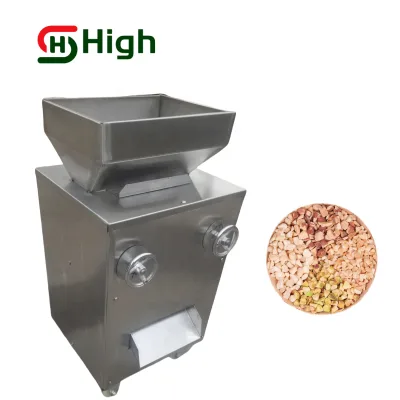


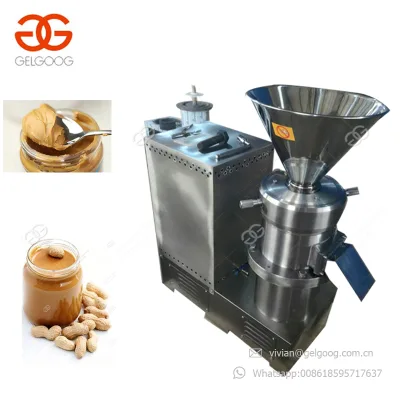


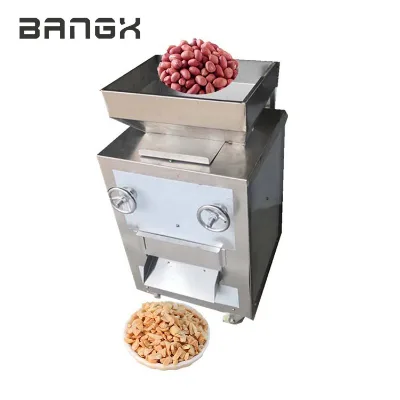
Comprehensive Sourcing Guide
Strategic Sourcing Guide for Peanut, Sesame, and Macadamia Nut Grinders
Understanding the Technical Landscape of Nut Grinding Equipment
When sourcing machinery for processing peanuts, sesame seeds, and macadamia nuts, buyers must navigate a complex array of technical specifications that directly influence operational efficiency and final product quality. The market presents a diverse range of equipment, from universal cylindrical grinders designed for heavy industrial metalworking to specialized multi-use grinding machines tailored for food processing. For the specific application of nut grinding, the distinction between a "Universal Cylindrical Grinder" and a dedicated "Peanut Grinder" is critical. The latter is engineered with specific parameters to handle the unique oil content and texture of nuts without generating excessive heat that could degrade flavor profiles.
Key technical attributes observed in the current market include power ratings ranging from 2.2kw to 3kw, with voltage requirements varying significantly between 220V and 380V systems. This variance necessitates a thorough review of the buyer's local electrical infrastructure before procurement. Furthermore, the controlling mode is a pivotal decision point; while some units operate on an artificial manual control system, others are classified as "Automatic Grade," offering streamlined production workflows. The structural design also varies, with vertical press series being a common configuration for high-efficiency grinding. Buyers should verify the specific "Press Series" rating, as units are categorized from the "First" to the "Fifth" series, indicating different stages of technological integration and capacity.
The capacity of these machines is another primary differentiator. Data indicates a wide spectrum of output capabilities, ranging from small-scale operations producing 20-25kg/H to large industrial units capable of 200-600kg/H. This disparity means that a single machine model, such as the DLG-200 or WG-130, may serve vastly different production volumes depending on the specific configuration. The physical dimensions of the machinery also require careful planning, with sizes observed ranging from compact units measuring 340320750mm to larger industrial footprints of 120010501400mm. Understanding these physical constraints is essential for factory floor layout and logistics planning.
Compliance, Certification, and Material Standards
In the food processing sector, compliance with material safety standards is non-negotiable. The primary material of construction for reliable nut grinders is stainless steel, a requirement driven by the need for hygiene, corrosion resistance, and ease of cleaning. The supply chain data confirms that "stainless steel" is a standard specification for both the machine body and the grinding components. Buyers must verify that the "prod_standard" explicitly guarantees food-grade stainless steel, as lower-grade alloys can lead to contamination risks and rapid degradation when exposed to the oils and acids present in nuts.
Certification status is a critical factor in supplier evaluation. While the market data indicates that products are often listed with "ISO Condition:New," this refers to the condition of the machine rather than a specific quality management certification. Buyers should not assume that a "New" condition implies ISO 9001 or food safety certifications (such as HACCP or FDA compliance) without explicit documentation from the supplier. The absence of specific certification names in the provided data underscores the need for due diligence. Procurement teams must request valid certificates of conformity that align with the destination country's food safety regulations.
Furthermore, the "Condition" of the machinery is listed as "New" across the observed inventory, but buyers must distinguish between factory-new units and refurbished equipment that may be marketed as new. The "Automatic Grade" attribute suggests a level of modernization, yet this does not inherently guarantee compliance with international safety standards. Verification of the "prod_standard" regarding the machine's construction and the "Raw Materials" it processes is essential. For instance, while the machinery is designed for peanuts, sesame seeds, and almonds, the compatibility with macadamia nuts—a harder nut—requires specific verification of the grinding wheel abrasives and the structural integrity of the press series.
Cost Drivers and Pricing Dynamics
The pricing structure for nut grinding machinery is influenced by a complex interplay of factors, including power consumption, material quality, automation level, and production capacity. The observed price range in the market spans from $150 to $50,000, a vast disparity that reflects the difference between small-scale manual units and fully automated industrial lines. A machine with a 3kw power rating and a capacity of 200-600kg/H will naturally command a higher price point than a 2.2kw unit with a 20kg/H capacity.
Material costs are a significant driver, particularly the use of stainless steel. Machines constructed with higher grades of stainless steel, which offer better resistance to corrosion and easier sanitation, will be more expensive. Additionally, the "Customization" factor plays a substantial role in pricing. While the market data indicates that customization is "Available" for many units, some listings specify "Non-Customized" or "Customized" options. Customizing a machine to fit specific production lines, such as altering the voltage from 380V to 220V or modifying the dimensions to fit a specific facility, will incur additional costs.
The "Lead Time" is another variable that affects the total cost of ownership. Production times are observed to range from 3-7 days for standard models to 10-15 days for customized orders. Longer lead times can impact project schedules and may require expedited shipping fees, which should be factored into the total procurement budget. The "MOQ" (Minimum Order Quantity) is consistently observed as 1, offering flexibility for small businesses, but bulk orders may unlock different pricing tiers not explicitly detailed in the current data. Buyers should negotiate based on the total value of the order and the complexity of the customization required.
Typical Applications and Operational Versatility
The versatility of modern nut grinders is a key selling point, with many units designed as "Multi-Use Grinding Machines." The primary application is the transformation of raw nuts into powder or paste. Specific product attributes confirm that these machines are capable of grinding peanuts into powder, a process that requires precise control over particle size to achieve the desired texture for peanut butter or flour. The "Function" is explicitly defined as "Grind Peanut Into Powder," but the "Raw Materials" list also includes sesame seeds and almonds, indicating broad applicability.
The "Application" field often lists "Flour," suggesting that these machines are also suitable for producing nut flours, which are increasingly popular in gluten-free baking and specialty food products. The capacity of the machine determines the scale of application; a 20-30kg/H unit is ideal for small artisanal producers or pilot plants, while a 200-600kg/H unit is suited for large-scale commercial manufacturing. The "Structure" of the machine, often vertical, is designed to optimize the flow of materials through the grinding chamber, ensuring consistent particle size distribution.
For macadamia nuts, which are harder than peanuts and sesame seeds, the "Press Series" and "Grinding Wheel" abrasives become critical. Buyers must ensure that the machine's "Abrasives" are rated to handle the hardness of macadamia nuts without excessive wear. The "Voltage" and "Herts" (50Hz, 3phase) specifications must match the local power grid to ensure safe and efficient operation. The "Weight" of the machine, ranging from 37kg to 55kg for smaller units, also influences the installation requirements, particularly regarding floor load-bearing capacity and vibration dampening.
Supplier Evaluation and Quality Control Protocols
Evaluating suppliers for nut grinding machinery requires a rigorous approach to verifying claims and ensuring product reliability. The "prod_origin" is frequently listed as "Henan" or "Zhengzhou" in China, regions known for their manufacturing hubs. However, buyers should not rely solely on the origin location; instead, they must verify the supplier's track record, production capacity, and after-sales support. The "Production Time" of 3-7 days for standard models suggests a responsive supply chain, but buyers should confirm if this includes packaging and shipping preparation.
Quality control should begin with the verification of the "prod_packing" standards. Observations show a mix of "Wooden Case Package," "Standard Export Package," and "Plywood Case with Pack Film." These packaging methods are designed to protect the machinery during international transit, but buyers should request photos of the actual packaging to ensure it meets the rigors of long-distance shipping. The "Standard Export Package" implies adherence to international shipping norms, but specific details on moisture protection and shock absorption should be confirmed.
Buyers must also scrutinize the "Customized" status of the machine. While "Customization" is available, the presence of "Non-Customized" options suggests a standardized baseline. For critical applications, a customized solution may be necessary to ensure compatibility with existing production lines. The "Key Word" of "Grinder" and "Grinding Machine" is broad, so buyers should request detailed technical drawings and specifications to confirm that the machine meets their specific processing requirements.
Long-Term Procurement and Maintenance Considerations
Long-term procurement success depends on understanding the maintenance requirements and lifecycle of the grinding machinery. The "Condition: New" status is a starting point, but the durability of the machine depends on the quality of the "Grinding Wheel" and the "Stainless Steel" construction. Buyers should inquire about the availability of spare parts, particularly the grinding wheels and seals, which are subject to wear and tear. The "Automatic Grade" of the machine may reduce manual labor but could increase the complexity of maintenance, requiring specialized technical support.
The "Lead Time" of 10-15 days for customized orders indicates that the supply chain can handle specific requests, but buyers should plan for potential delays in the delivery of spare parts. The "Weight" and "Size" of the machine are critical for long-term placement; a machine weighing 55kg or more may require a dedicated foundation to prevent vibration-related damage. The "Voltage" compatibility is also a long-term consideration; if the local power grid fluctuates, the machine's electrical components may be at risk, necessitating the installation of voltage stabilizers.
Finally, the "Application" of the machine in a high-volume environment will dictate the frequency of maintenance. A machine operating at 600kg/H will require more frequent servicing than one operating at 20kg/H. Buyers should establish a maintenance schedule based on the manufacturer's recommendations and the specific "Raw Materials" being processed. Regular cleaning and inspection of the "Grinding Wheel" and the "Vertical Structure" will ensure consistent product quality and extend the operational life of the equipment. By focusing on these long-term factors, buyers can secure a reliable investment that supports their production goals for years to come.
Comparative Analysis of Machine Specifications
To assist buyers in making informed decisions, the following table summarizes the key specifications observed in the market for peanut, sesame, and macadamia nut grinders. This comparison highlights the variability in capacity, power, and dimensions that buyers must consider.
| Specification | Small-Scale Unit | Medium-Scale Unit | Large-Scale Industrial Unit |
|---|---|---|---|
| Model Number | WG-130 / WG100 | DLG-200 | Variable (High Capacity) |
| Capacity | 20-25 kg/H | 200-600 kg/H | 200-600 kg/H |
| Power | 2.2 kw | 3 kw | 3 kw |
| Voltage | 220V | 380V | 380V |
| Frequency | 50Hz | 50Hz, 3phase | 50Hz, 3phase |
| Dimensions | 340320750 mm | 120010501400 mm | Variable |
| Weight | 37 kg - 55 kg | Variable | Variable |
| Material | Stainless Steel | Stainless Steel | Stainless Steel |
| Press Series | First | Fifth | Variable |
| Structure | Vertical | Vertical | Vertical |
| Packing | Plywood Case | Wooden Case | Standard Export |
This table illustrates that while the core material (stainless steel) and structure (vertical) remain consistent, the scale of operation dictates the power, capacity, and physical footprint. Buyers should select a unit that aligns with their current production volume while allowing for future scalability. The "Customization" option allows for adjustments in voltage and dimensions, ensuring that the machine can be integrated into existing facilities regardless of the specific constraints. By carefully evaluating these specifications, buyers can identify the most suitable equipment for their specific nut processing needs.
FAQs
What is the typical capacity range for these grinders?
Capacity ranges from 20 to 600 kilograms per hour depending on the specific model. Smaller units produce 20-30kg per hour while larger industrial machines handle up to 600kg per hour for high-volume production needs.
Can these machines process macadamia nuts and sesame seeds?
Yes, the raw materials list includes peanuts, sesame seeds, and almonds for grinding into powder. While macadamia nuts are harder, the vertical structure and stainless steel construction support various nut types within the specified capacity limits.
Which voltage options are available for these grinding machines?
Available voltage options include 220V and 380V systems with 50Hz frequency. Buyers must verify their local electrical infrastructure before procurement since units operate on either single-phase or three-phase power configurations.
How long is the lead time for custom orders?
Standard production times are 3-7 days, while customized orders require 10-15 days. This timeline covers manufacturing and preparation, though actual shipping duration depends on the destination and specific packaging requirements selected.
What material is used to construct the machine body?
The primary construction material is stainless steel to ensure hygiene and corrosion resistance. This standard specification is critical for food processing applications to prevent contamination and facilitate easy cleaning of the grinding components.
Are these machines available with automatic control systems?
Yes, some units are classified as automatic grade while others use artificial manual control. The controlling mode varies by model, allowing buyers to select between streamlined automated workflows or traditional manual operation systems.